
03 April 2026
What Does a Fuel Additive Actually Do? A Beginner's Guide
By Atomax Additives
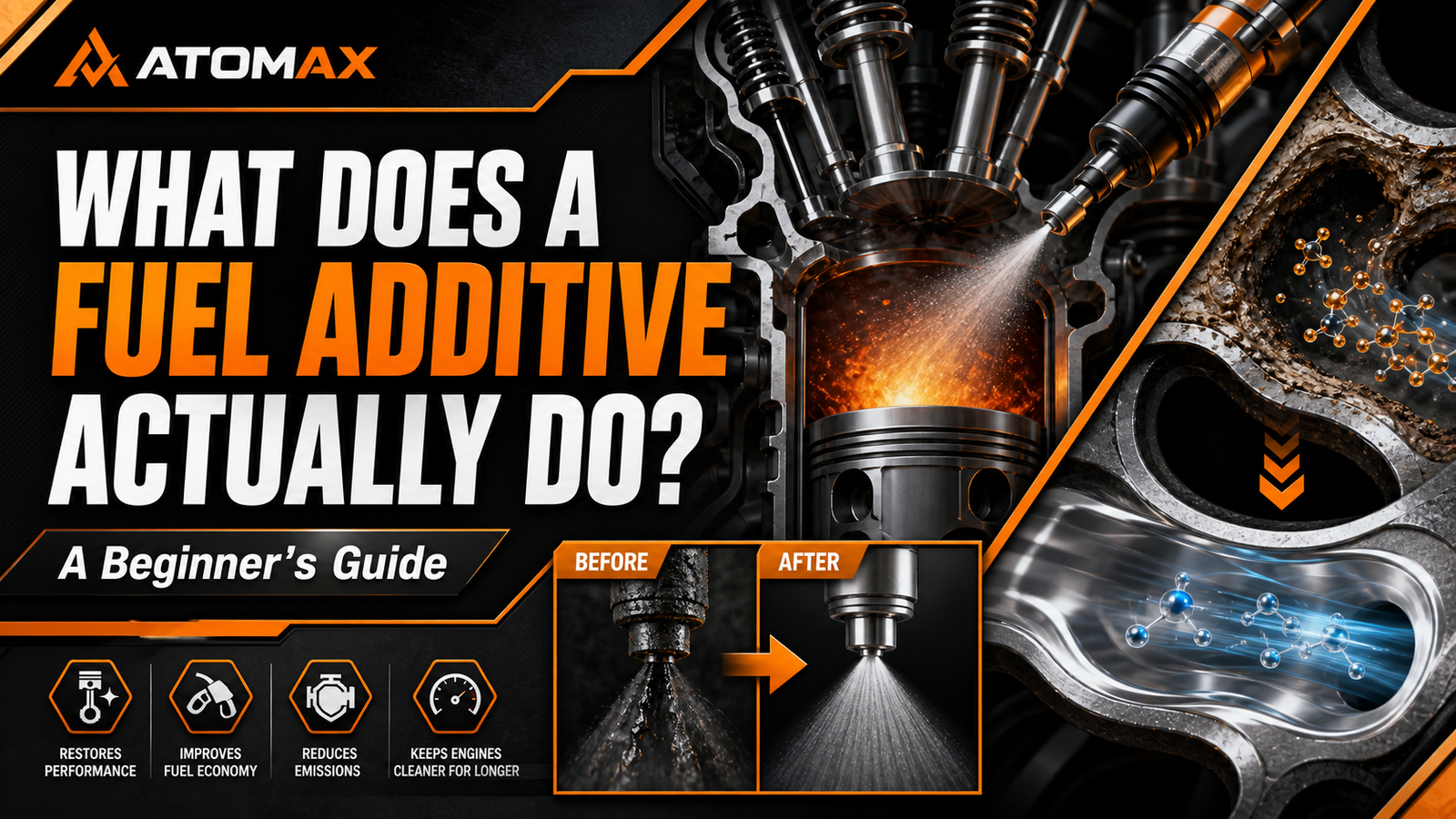
Pour a small bottle into your fuel tank and your engine runs smoother, pulls harder and drinks less fuel — it sounds like a gimmick until you understand the chemistry. A genuine fuel additive is a concentrated package of functional chemicals, each solving a specific problem that ordinary pump fuel leaves behind. Here's what's actually inside the bottle and what each component does.
Detergents: the deep cleaners
The workhorse of any quality additive. Polyetheramine (PEA) and similar detergent molecules bond to the carbon and varnish deposits that build up on injector nozzles, intake valves and combustion chambers, breaking them into particles small enough to burn away harmlessly. This matters because even a thin deposit layer on an injector tip ruins its spray pattern, and a bad spray pattern wastes fuel on every single combustion cycle.
Corrosion inhibitors: the metal protectors
These molecules form a microscopic protective film on steel and aluminium fuel-system surfaces. In the era of E20 ethanol-blended petrol, which absorbs moisture from the air, this protection has gone from nice-to-have to essential, particularly for vehicles that sit parked for days at a time.
Lubricity agents: the friction fighters
Fuel pumps and injectors are lubricated by the fuel itself. Ethanol blending and modern low-sulphur fuels have reduced this natural lubricity. Lubricity improvers restore it, reducing wear on the components that are most expensive to replace.
Combustion improvers and stabilisers
- Combustion catalysts help fuel burn more completely, extracting more energy per drop and reducing unburnt hydrocarbons out the exhaust.
- Fuel stabilisers slow the oxidation that turns old petrol into gum, valuable for occasionally used vehicles.
- Demulsifiers/water managers help the fuel system deal safely with small amounts of absorbed moisture.
Does your vehicle need one?
A petrol vehicle using E20 fuel may benefit from preventive fuel-system care if deposits are present or if it is parked for long periods. Atomax combines detergent, corrosion-inhibitor and lubricity-support chemistry in one petrol treatment. Pour the recommended dose into the tank before refuelling, then drive normally. Persistent rough running or hesitation should still be diagnosed by a mechanic.