
26 May 2026
Is E20 Petrol Safe for Old Cars and Bikes? What Every Owner Should Know
By Atomax Additives
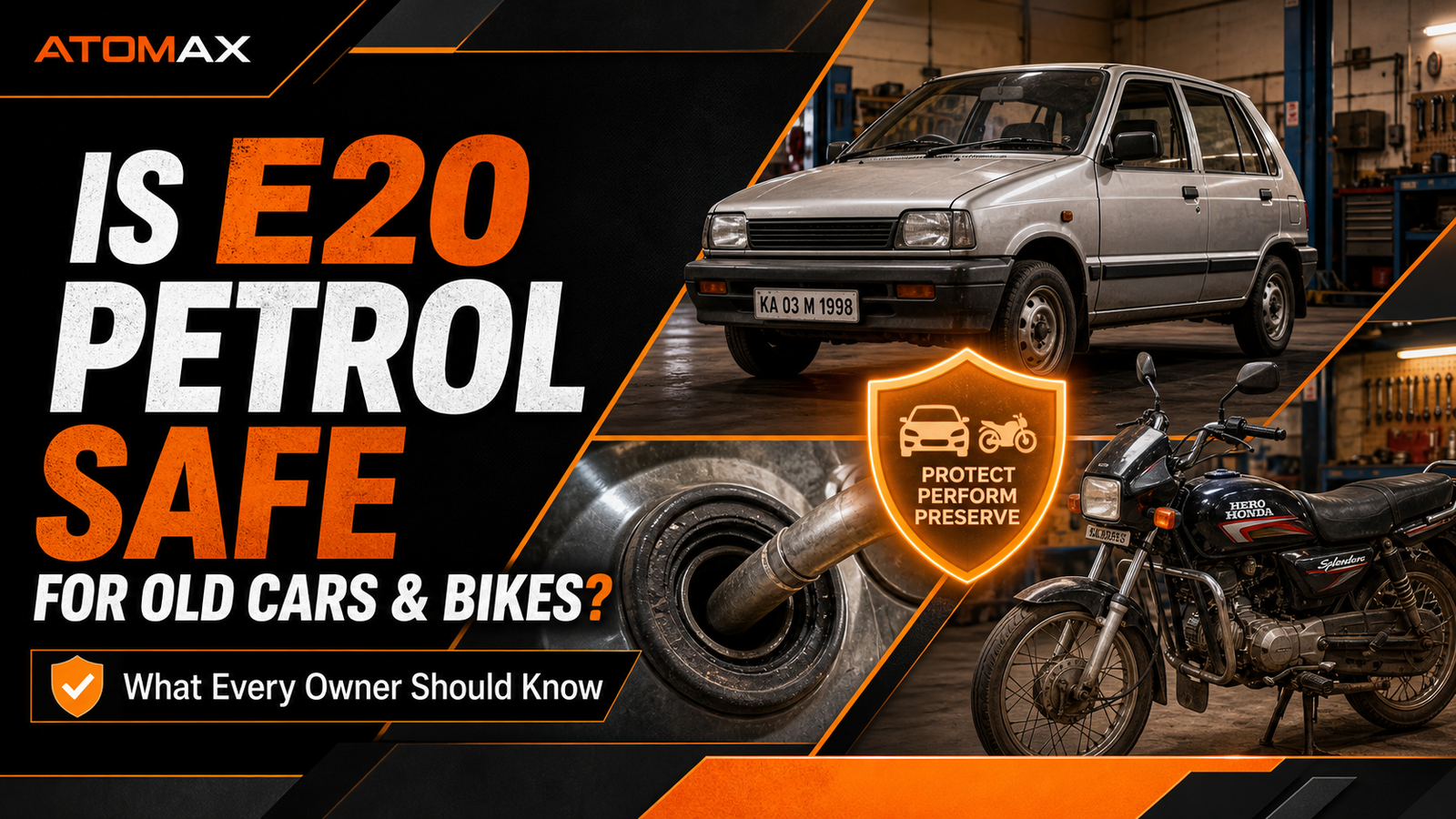
India has millions of vehicles on the road that were built before E20 fuel existed. If yours is one of them, you've probably wondered whether the fuel now coming out of every pump is quietly damaging your engine. The honest answer: E20 won't destroy an older engine overnight, but it does create three slow-acting problems you should manage.
Problem 1: Rubber and plastic degradation
Ethanol is a strong solvent. Fuel hoses, O-rings, gaskets and diaphragms in vehicles designed for E5/E10 use rubber compounds that ethanol gradually swells, hardens or cracks. Symptoms show up as fuel smell, weeping hoses, or a carburettor that won't hold tune. Replacement with ethanol-resistant parts during regular service is the permanent fix.
Problem 2: Corrosion from absorbed water
Ethanol absorbs moisture from the air. In a vehicle used daily this is rarely dramatic, but in bikes and cars that sit parked for weeks, or in humid coastal cities, the water-ethanol mix can corrode steel tanks, fuel pumps and injector internals. Rust particles then travel downstream and clog filters and injectors.
Problem 3: Deposits and mileage loss
E20's solvent action loosens years of old varnish inside the tank and lines, which redeposits on injector tips and valves. Combined with ethanol's lower energy density, most older vehicles see mileage drop by 4–8% after switching to E20, sometimes more if injectors foul up.
The practical protection checklist
- Don't let the vehicle sit with a half-empty tank for weeks — condensation makes the water problem worse. Keep the tank full when parking long-term.
- Ride or drive the vehicle regularly so fresh fuel keeps moving through the system.
- Replace fuel hoses and seals with ethanol-rated parts at the next service.
- Use a fuel additive with corrosion inhibitors and detergents every 2,000–3,000 km — this directly counters all three E20 problems: it protects metal from moisture corrosion, keeps loosened deposits from settling on injectors, and restores lost combustion efficiency.
- Watch for early symptoms: hard starting, rough idle, fuel smell, or a sudden mileage drop.
Bottom line
Older vehicles can live long, healthy lives on E20, but not by accident. A small amount of preventive care, including a regular dose of a multifunctional additive like Atomax — 100ml for bikes or 250ml for cars — costs far less than replacing a corroded fuel pump or a set of injectors.