
26 March 2026
How to Protect Your Engine From Ethanol-Blended Fuel: 7 Practical Steps
By Atomax Additives
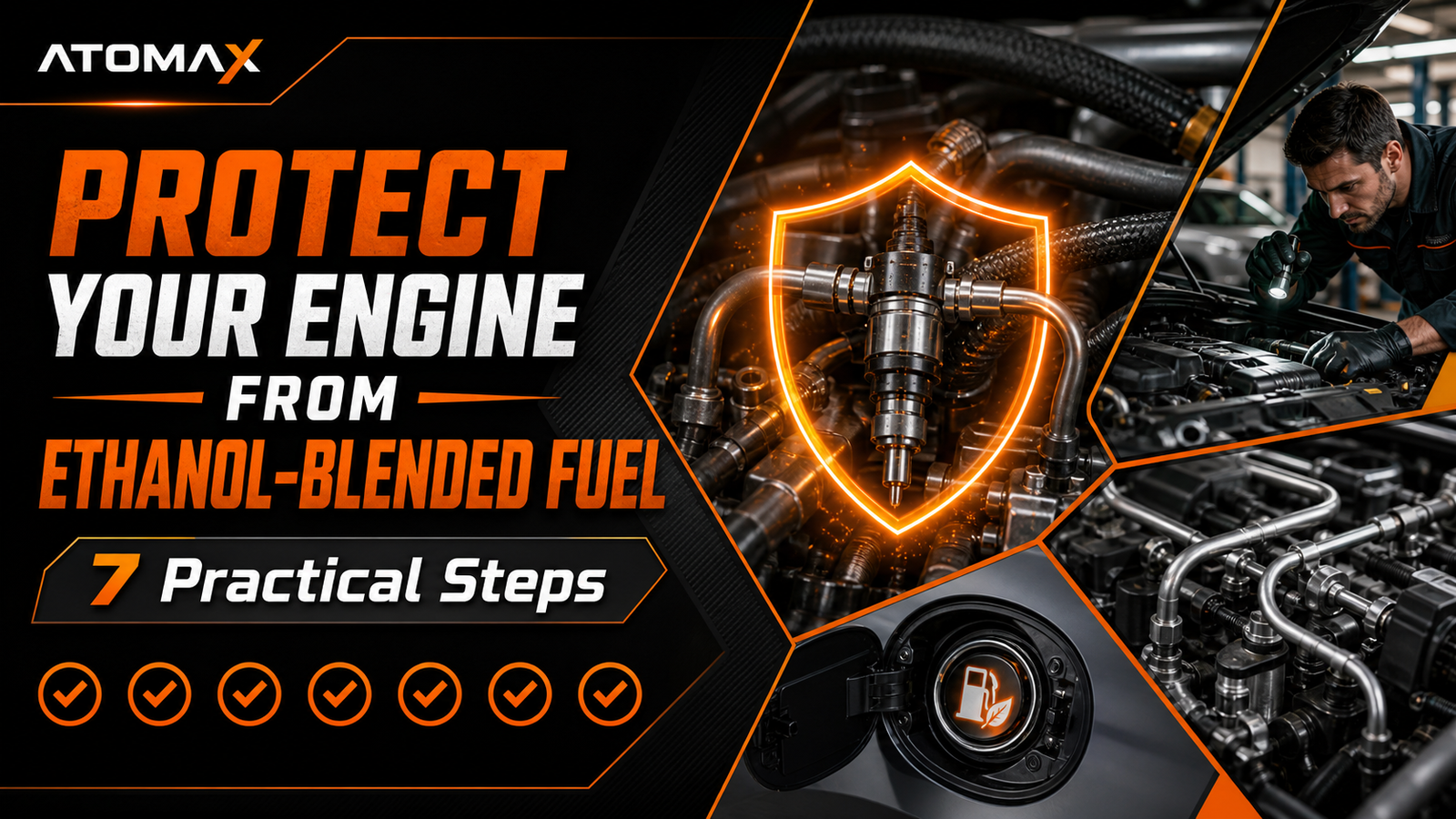
Ethanol-blended fuel is here to stay. India is already discussing blends beyond E20. Rather than worrying about it, smart owners build a simple protection routine. These seven steps come straight from what workshops across India now recommend for vehicles running on E20.
1. Keep fuel fresh
Ethanol fuel ages faster than pure petrol. Try to consume a tank within 3–4 weeks. For a second car or a bike used occasionally, buy smaller quantities more often rather than filling up and letting it sit.
2. Park long-term with a full tank
A half-empty tank has more air, and air carries moisture that ethanol absorbs. If a vehicle will sit for more than a couple of weeks, fill the tank to minimise the air space, and dose it with a fuel additive that contains corrosion inhibitors before parking.
3. Use a multifunctional fuel additive regularly
This is the single highest-impact habit. A quality additive like Atomax replaces what ethanol dilutes out of petrol: detergents that keep injectors and valves clean, corrosion inhibitors that neutralise moisture damage, and lubricity agents that protect the fuel pump. One 100ml bottle treats a bike for 3–4 tanks; the 250ml bottle covers 100 litres for cars.
4. Replace rubber parts with ethanol-rated ones
At your next service, ask for ethanol-resistant (Viton/FKM or E20-rated) fuel hoses, O-rings and seals, especially on pre-2020 vehicles. It's a small job that prevents leaks and carburettor problems later.
5. Don't ignore the fuel filter
Ethanol's cleaning action sends dislodged debris into the fuel filter. Replace it at the manufacturer interval, or earlier if you notice power loss at high revs — a classic clogged-filter symptom.
6. Watch for early warning signs
- Hard starting or extended cranking, especially after the vehicle has been parked
- Rough or hunting idle
- A mileage drop of more than 5% that servicing doesn't explain
- Fuel smell around hoses or the carburettor
- Hesitation or flat spots on acceleration
7. Service on time, every time
Ethanol-era engines punish skipped services. Fresh engine oil, clean air filters and correctly gapped spark plugs all help the engine tolerate E20's quirks. Combined with a regular additive dose, a well-serviced engine will run on E20 for lakhs of kilometres without fuel-related trouble.